

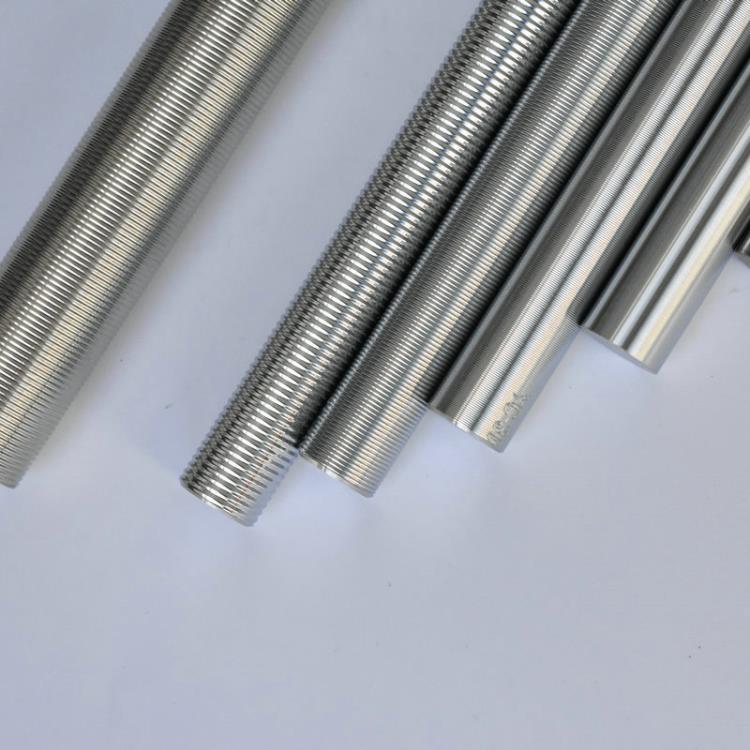
In Meyer rod coating, excess coating is applied to the substrate as it passes the applicator roll. The wire‑wound metering rod — also called a Meyer rod — leaves only the desired amount of coating on the surface. Coating weight is determined by the wire diameter used. This method is highly forgiving of minor mechanical variations in other machine parts.
It uses a pan‑fed kiss‑coating roll to transfer excess coating onto the web. A smooth or wire‑wound rod then evens or meters the layer. Coating weight can be adjusted by changing web tension over a smooth rod, using rods with different wire diameters (thicker wire = heavier coating), or altering the wrap angle around the applicator and metering rods.
These coaters are widely used as pre‑coaters or back‑wet coaters for board. They produce an extremely smooth base ideal for subsequent top‑coat applications.
One of the most common coating methods, the Meyer rod consists of a stainless steel core tightly wrapped with stainless steel wire of varying diameters. It wipes away surplus coating solution and controls coating weight. After doctoring, wet film thickness is roughly one‑tenth of the wire diameter. Rods are available in many wire sizes to achieve different coating weights. The table below lists available wire sizes and corresponding wet thickness values. Dry thickness depends on the solids content of the coating fluid.