

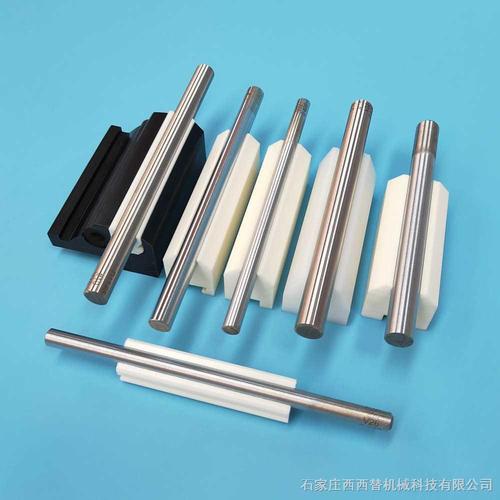
When manufacturers need to apply adhesive onto continuous web substrates, a variety of coating methods are available to suit different requirements. Among these, Meyer rod coating stands out as one of the most widely adopted and trusted techniques. It enables the uniform and consistent application of adhesives, while delivering exceptional precision in controlling coating thickness — a key advantage for achieving reliable product quality and performance.
At its core, a Meyer rod consists of a precision‑machined stainless steel core tightly wrapped with stainless steel wire in a range of carefully calibrated diameters. As the coating solution is applied to the substrate, the rod acts as a metering bar: it removes excess material and accurately regulates the final coating weight. The wet film thickness remaining after this doctoring process is directly determined by the diameter of the wire used, typically measuring approximately one‑tenth of the wire diameter.
To accommodate diverse production needs, rods are manufactured with an extensive selection of wire gauges, allowing for precise adjustment across a broad spectrum of coating weights. The table below outlines the standard wire sizes available and the corresponding wet film thicknesses they produce. It is important to note that the resulting dry coating thickness depends primarily on the solids content within the coating formulation used.